
Etsu-bo

On my search for samurai women I came across this book by Etsu Inagaki Sugimoto called A Daughter of the Samurai (1925). As I began to read her work, which she had written in English, I felt a growing affinity with this girl turned woman from Meiji Era Japan.
She was quite amazing, and I don’t even know where to start with my gushing.

History
Etsu was born to a samurai family at a rupture point in cultural history. The samurai class, along with the centuries old feudal class system1 had been abolished in Japan. The Shōgunate had fallen and the government was now under imperial rule by Emperor Meiji, who rapidly transformed Japan through industrialisation and westernisation.
Her Samurai
Etsu had been a little girl when her father was stripped of his rank as lord over Nagaoka Castle. She remembers the samurai age but not enough to have lived through it.
‘At the bitterest moment that Nagaoka ever knew, [she] found herself on the defeated side. When my mother learned that her husband's cause was lost and he taken prisoner, she sent her household to a place of safety, and then, to prevent the mansion from falling into the hands of the enemy, she with her own hands set fire to it and from the mountain-side watched it burn to the ground.’
Her mother was a Samurai Woman. She upheld her duty to the bitter end, which meant destroying their ancestral home. Her father comes out of prison alive but is a changed man, because he and his retainers (all ex-samurai) no longer have a place in the world, and are lost. Etsu’s father says to her one day as they are resolving to sell their precious heirlooms of hand-crafted armour and swords:
‘Useless beauty had a place in the old world, but the new asks only for ugly usefulness.’
The idea of money was alien to samurai because their wealth had previously been distributed from the Shōgun; and they viewed commerce to be a crass activity practiced by the merchant class. The warrior code of Bushidō also held a general contempt for material things. Yet, nothing could stop the pushy pace of encroaching capitalism forcing open Japan’s borders to foreign trade and ideas.
Her Shift
In an eye-opening chapter called ‘The old and the new’, Etsu is clearly in the midst of a cultural shift that we get to witness through the eyes of an eight-year-old girl.
Etsu comes home from school one day to find her house pervaded in gloom. She tries to remain calm and walks with care to her grandmother’s room. She finds her grandmother in a grave disposition and with the help of a maid, they are wrapping the small Buddhist shrine in holy white paper, sealing it off from view.
‘I remember that my voice trembled a little as I asked, “Honourable Grandmother, is – is anybody going to die?”
I can see now how she looked – half amused and half shocked.
“Little Etsu-ko” she said, “you talk too freely, like a boy. A girl should never speak with abrupt unceremony…
Your honourable father has ordered his household to eat flesh,” she said very slowly. “The wise physician who follows the path of the Western barbarians has told him that the flesh of animals will bring strength to his weak body, and also will make the children robust and clever like the people of the Western sea. The ox flesh is to be brought into the house in another hour and our duty is to protect the holy shrine from pollution.”
That evening we ate a solemn dinner with meat in our soup; but no friendly spirits were with us, for both shrines2 were sealed.
Grandmother did not join us. “I would rather not grow as strong as a Westerner – nor as clever,” she answered sadly. “It is more becoming for me to follow the path of our ancestors.”
My sister and I confided to each other that we liked the taste of meat. But neither of us mentioned this to anyone else; for we both loved Grandmother, and we knew our disloyalty would sadden her heart.’
There are many other moments like this in her book where Etsu struggles with staying true to her samurai heritage, while also looking forwards to make the best of her life in a strange new world. These tussles of values and customs comes to a head when she must decide how to raise her own daughters.
Her Story
Her family, specifically her samurai father, had always fondly called her Etsu-bo; the suffix ‘bo’ being appropriate for a boy’s name rather than a girl’s, which would have been Etsu-ko.
Her father encouraged Etsu-bo to be bold and brave, not quiet and diminutive like a girl. She had a dog named Shiro who was her best friend, and her father called him her “faithful vassal”. Etsu-bo often rode Shiro around the garden and gallivanted like a boy – to the dismay of her mother and grandmother – who were both anxious that her upbringing would preclude her from ever being considered appropriate wife material.
Then in one fell swoop Etsu-bo’s life changes. Her faithful dog, swiftly followed by her beloved father, both die. She is then betrothed to marry a man when she is thirteen years old. She follows her duty. But to everyone’s surprise (most of all to her ever-dutiful samurai mother) he moves to America, and she as a wife-to-be must follow him (before ever having met him!)
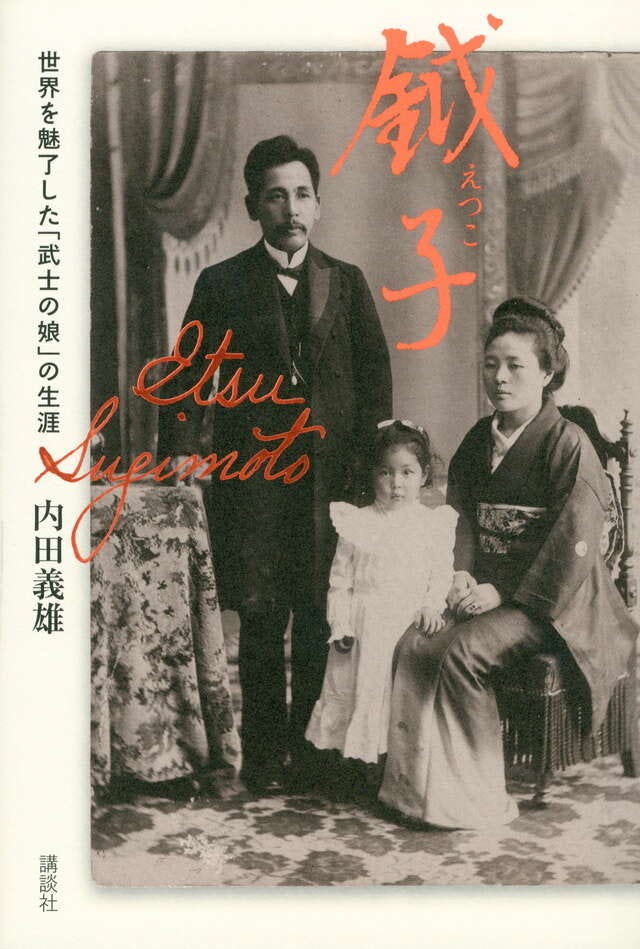
For the girl Etsu to have witnessed this cultural shift from samurai to salary man is mind-boggling enough. But what makes her story stand out even more is she took her samurai spirit with her when she emigrated to Ohio, America. She married, raised two daughters and eventually became a Japanese American novelist who held a teaching position at Columbia University. What a life!
I couldn’t recommend enough reading her book. There are instances of culture shock which are so intriguing, like when Etsu in America first sees a woman kiss a man on a train. Japan didn’t used to have kissing?! I thought eating meat was going to be the biggest revelation.
Or the incredibly strict gender codes in place when Etsu was a girl which prohibited her from being in the same room as some of her ancestral heirlooms, as her gender was thought to pollute them. But as time marches on and the ways of Old Japan are forgotten, she is one day sorting through “old junk” in a storeroom and comes across these sacred items, and after some thought, decides to peek at them. Sacrilege is mixed with sadness; we feel her conflicted sense of longing for a samurai past which has been shed.
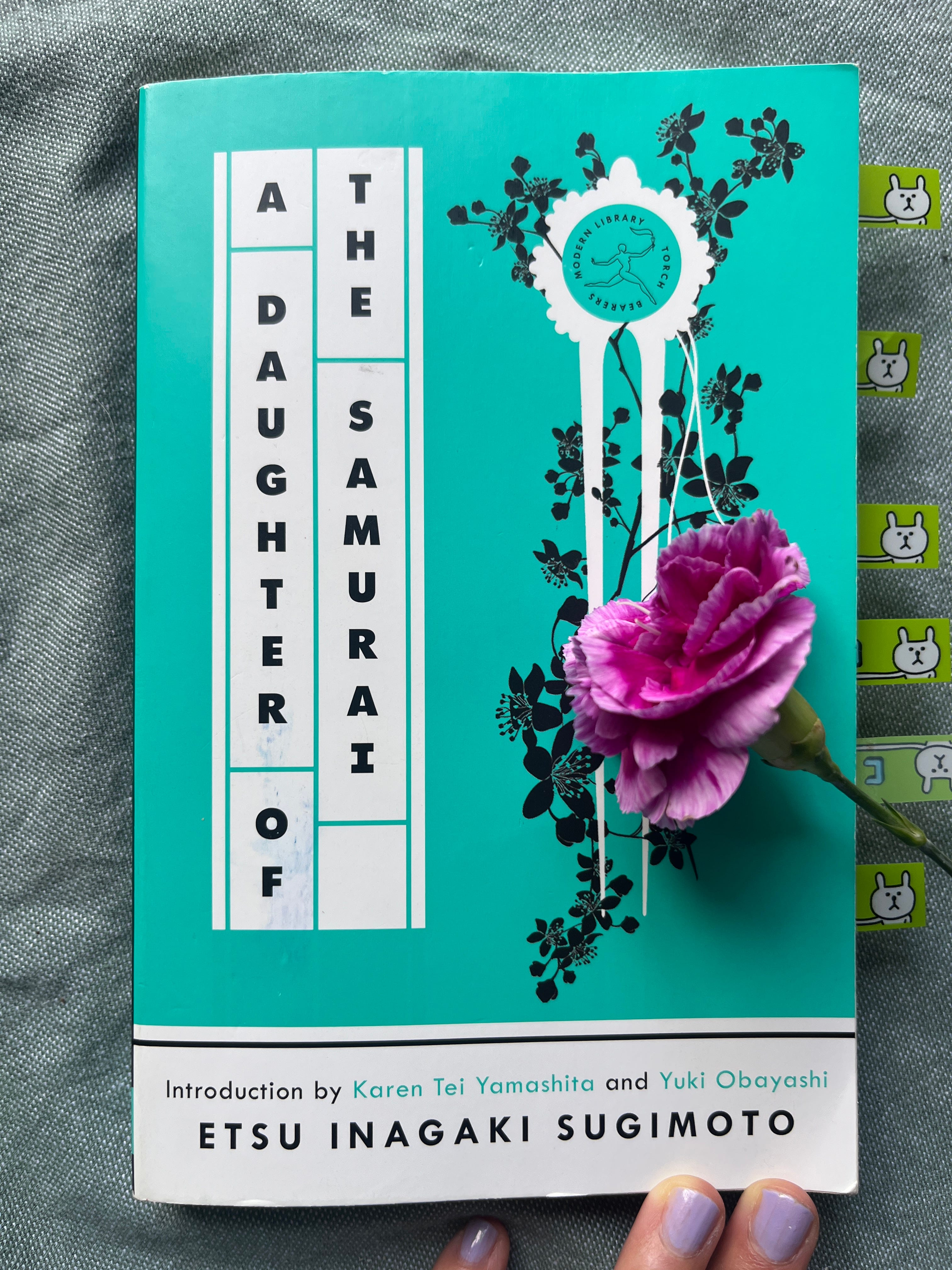
More information and where to buy the latest imprint of A Daughter of the Samurai can be found at Penguin Random House part of the Modern Library Torchbearers here
Society had been stratified by this four-tiered class system referred to as Shi-nō-kō-shō 士農工商 (Samurai-Farmer-Artisans-Merchants) More info.
In Japanese homes there are traditionally two shrines, one for Buddhism and one for Shinto.
I think I am going to have to track this down.